Spring Lizards and Summer Days

000craneNowadays at my age, the long hot summer days are just not as much fun as they used to be when I was a kid.  Back then we really had nice long breaks from school.  None of that six or seven weeks out, and then right back in the school building.  Back in “the old days” we had three FULL months out for summer break.
None of that year round school for us old timers!  May 31 rolled around, and it’s see ya’ later to the teachers until the first week of September….Yahooo!!  Heck, that was so long, I forgot most of what I’d learned the year before in school!  I think that’s why the first six weeks every school year back in the good old days were “review” weeks.  “Reteaching” weeks for some pretty good school teaches.  But, we made it through, and I wouldn’t take anything for the memories of those long, hot summer days back when I was young.

I tell you, spring and summers were the best back in the 50’s and 60s’.

I would go to the old wooden toy box back in my room, and starting digging down to the bottom, looking for my old  worn out, smelly leather baseball glove with “Pee Wee” Reece’s name engraved in it.  I don’t know how I ended up with Pee Wee, as I never played a lick of ball in the infield.  I was always an outfielder.

I tried out for third base once, but after I had stopped the first four hard bouncer’s that came my way with my face instead of my glove, the coach thought it might be safer to put me in left field.  I agree with his decision.

I liked left field.  It was one of those positions where you could kind of day dream a little.  Most everything that came out that way was either an easy pop fly, or a one bouncer.  I was a cinch at catching those.  None of that “hot corner” stuff for me.

I once was standing out in left field during a game and looking down at the ground trying to spot any four leaf clovers that might be growing there.  I heard the loud crack of the bat, and looked up to see the baseball headed over my head.  Way over my head.  I didn’t want to look completely stupid, so I turned around and stuck my old glove out and ran as fast as I could towards the fence.  The ball dropped right into the webbing of my glove.  I never saw it until it did.  I heard a cheer go up from the stands, and when we came in, I got more pats on the back, and attaboys then I had ever gotten before.  I just said “I had it all the way”

I could never bring myself to disappoint all those people by telling them it was just pure luck.

The other great thing about warm weather was spring lizard and craw dad hunting at Grandpa’s and Grandma’s house.  When warm weather hit, we would go up there a lot more often.  It was difficult during the winter time, because there were only two bedrooms downstairs at their house, which meant the remainder of the guests, had to sleep upstairs.  During the winter time, sleeping upstairs was just like sleeping outside.  There was NO heat.  I spent many a winter night with 10 quilts piled on top of me, unable to turn over, but desperately trying to conserve what little body heat was emanating from me in order to be alive the next morning.  I always managed to do it somehow.

So, besides at Christmas, I didn’t like Winter time visiting at the old folk’s house!

But with spring and warm weather coming, there was the promise of fishing, and in order to fish there had to be bait.  This meant my favorite activities of digging in the dirt for worms, and turning over the rocks down in the little fast running creek in front of the folk’s house for Spring lizards and Crawdads.

The only draw back to trying to catch a bucket full of these water dwelling creatures was that they were also favorites of the snakes that prowled the banks of that same creek.  I was never really too afraid of snakes when I was a kid until after my Grandpa’s Uncle “Lark” Davenport killed a rattlesnake one day that he stretched across the old dirt road leading up to Grandpa’s house.  He stuck its head end in the bank on one side, and its tail end in the dirt bank on the other side.  Now, that little old road was narrow, but I estimate it was at least 7 feet across, so my respect for the snakes in those parts increased tremendously after that.  I asked Uncle “Lark” how he killed it, and told me he cut its head off with a hoe while he was out in his corn crib.  Apparently the rattler was stocking up on some of the rats that always frequented that place.  “If he hadn’t been a rattler I’d have let him be,” said Uncle Lark.  I’d have let him be anyway, I think.  He would have owned the corn crib after that.  Rats and all.

Some of those spring lizards that we used to catch back then were as big as small snakes.  Imagine turning over a big old rock, and seeing something black wiggling around that’s about a foot long.  Would you stick your hand down in there and grab it?  I sure did, and laughed about it the whole time.  “If the bass don’t bite that,” I thought “then it might bite the bass!”  Either way, we get the fish.

The crawdads were harder to catch then the spring lizards.  Have you ever seen one of those little boogers take off?  They are like a backwards rocket!  I don’t know how they do it, but when they get scared they shoot water out their rear ends, start flapping their tails and away they go.  You had to be good at estimating where they were GOING to be, not where they had been, in order to catch them.  I never had the least idea that humans ate those things when I was a kid.  The first time I went to Louisiana as an adult, and someone tried to serve me a dish made with Crawdads, I got kind of nauseated.  After I tasted it though, it wasn’t half bad.  I kind of like Etouffe’ now.

Yep,  that’s how I feel today with all this heat in the air.  I remember how cold that creek water was, even on the hottest of June, July and August days. I remember how I would even dare to reach down and bring a handful of that pungent water up to my mouth and drink it in deeply.

My blood is partially made from that creek water, and my soul is partially lodged in that mountain land.

That little old creek is still there, but I don’t know what the new owners of the land would think about an old man tromping down the middle of their creek with a Styrofoam bucket and yelling yahoo every time he came up with a lizard.

I wonder if there are even any left?

Grandpas

I only knew one of my Grandfathers. My Dad’s Dad died when I was two years old, and all of my Great Grandfathers were gone before I was born. So, my Grandpa Stewart was the only Grandfather I ever remember.

He was a study in contrast. I learned a lot of my “bad” words from being around him, but he went to church each Sunday. He was a talented musician and singer, but I do not ever remember him saying I love you to anyone with that deep voice of his. Maybe I was just not around when or if he said it to anyone. If he did, it would have been after he went in the nursing home with dementia, and probably by accident.
He was tight as a drum with his money. Part of his Scottish ancestry not doubt, and partly because “hard” money was so hard to come across when he was a young man. I remember him taking his wallet out of the center pocket of his bib overalls at least a couple of times a day, and counting his money. Even if he hadn’t move an inch of his front porch, he would still count his money. Maybe he thought it was going to increase while it was sitting there in his pocket, or perhaps he just had forgotten how much was there a few hours earlier. I’m not sure.
He only “went to town” once a week to buy groceries, and he only paid for the “staples” such as sugar, flour, meal and salt. He made Grandma pay for everything else out of her money. I think she only drew 67 dollars a month from Social Security, and that was it.
He was 57 years old when I was born in 1950, so he always seemed like “the old man” to me. When I was 10 years old, and my Mother was going through her very difficult mental health problems, he was 67. We lived with them for several months during that time period.
From the stories my Mom told me about him before she passed away, he was not a gentle man when she was a young child. Certainly, not an ideal Father by any means. Still, I idolized him, as small children are wont to do with their grandparents in most cases. He was never so cruel to me as he was to my Mom…at least how she described him to be.
I went to school part of the year there in 1960, in Blue Ridge where they lived, and Grandpa gave me a dime every day with which to buy ice cream. Out of character for him I think, but he did it nonetheless. Maybe it was partially out of regret for the way he had treated my Mother. Maybe if was out of pity for the sickness which his daughter was having to go through. I’m not certain.
I have tried my best to be a different grandfather with all of my grandchildren. I haven’t always been successful. I inherited some of MY grandfather’s quick and severe temper and impatience unfortunately, but I have kept as tight a lid on it as possible.
Now, as I approach 67, I find that I will be a Grandfather to another child this fall. A granddaughter. She will be number nine. I’m really a lucky man, because I have been able to interact with my eight grandchildren more than many grandparents are able to.
I’ve tried to be gentle with them. The last time I gave one of them a little spanking, I liked to not have gotten over it. I don’t do that anymore. Never will ever again.
I’ve tried to be loving.
I hope that their memories of “the old man” will be more in line with a nature of empathy. I hope they remember building block towers and watching birds. I hope they remember singing songs, and taking walks.
I think they will all remember me telling them “I love you” I can guarantee you they have all heard it from me, and always will as long as I have my “senses” about me. I’m not saying this to by any means “toot my own horn” I’m certainly as imperfect in my own way as my Grandfather was in his.  None of us are saints.

Touch is best

IMG_0090Out of all the senses that we as humans possess, I believe that touch is the most important.

For over 37 years now on most nights, I rub my wife’s back while I read and she is going to sleep.  It’s sort of a habit now, but many times I do think about it.  I don’t think anything symbolizes love between two people more than touch does.  I feel very grateful that I have been allowed during my lifetime to touch so many people that I love.   I feel incredibly sad sometimes that one day I will not be able to touch those people any longer.  Either I will move on, or they will and that ability, that privilege will be lost.

All three of my kid’s were touched a lot by my wife and me.   I can’t count the times I heard people say:  “You’re going to spoil that child by holding them so much!”  Not so.  I don’t think you can hold a child and love them too much.  You can figuratively hold ON to a child too much and do it for selfish reasons, and cause problems.  But to hold and lovingly touch a baby?  Nah.  I don’t believe that.  I think (I hope) all of our three are well adjusted.  Sometimes if you can’t even bring yourself to say the words “I love you” a touch will suffice.  It will communicate that love.  Don’t get me wrong though, I think it should still be said with words.  The people you love NEED to hear it, for confirmations sake.  But at the very, very least, give them your touch.

Now our grandchildren have also been given the same treatment as our children. Both by us, and by their parents.  I still sometimes hear “You’re spoiling them” but at this point I don’t care.

Even if they had been blind and deaf like Helen Keller, they would have known, someway, somehow that they were loved.  They would have known by touch.  That’s all that Helen Keller had to go with, and look what a human being she turned out to be!  Just through touch and touch alone.

Many times we look but we don’t see, and we hear but we don’t listen.  We taste life and then never give it a second thought.

Our other most powerful sense, the sense of smell we reserve for our subliminal memories most of the time.  We catch a sniff of something and a memory automatically pops into our heads.  Sometimes pleasant, sometimes not.  But touch is the one that we have to consciously associate with things.  It serves us well as a protector when things are too hot or too cold, and we might remember when it saved us from getting badly hurt because of that.  But, to associate touch with love is something we don’t often do.  It’s something we have to learn to do.

Even when we are touching someone in an  act of love, with love, we have to teach ourselves that that is the reason we ARE doing it. We have to teach ourselves that touch is best.

Michelangelo painted God with his hand reached out towards Adam in an effort to touch him.  That is the most poignant scene of the entire Sistine Chapel ceiling to me.  God reaching out to touch us, to imbue some of his spirit and his soul to us through his all powerful touch.  I think he touched us, but do we appreciate it?  He reached us, but do we think about it?  That touch made us what we are.  It elevated us above the state of being just an animal and imbued us with a spark and a soul that will never die.  Wasn’t that a wonderful gift?

I really believe that when we die that our sense of touch is the last thing to go.  I can’t say for sure, I haven’t died yet and hope not too for a while longer.  I HAVE seen many people lying in a hospital bed unconscious and seemingly oblivious respond to a slight squeeze of the hand, or a brush to the head.  I know that they know that someone they love is reaching out for them, and touching them.  I think as people slip out of their human costume and in to their eternal form that when that last vestige of touch leaves them, that last connection to everything they are leaving behind, that there is just a moment of sadness that is felt before the call of the next life takes over.

Think about it next time you touch someone you love, and appreciate that moment.  You never know when those moments are going to run low and then run out.  You might regret that lost opportunity.  I don’t want to.

Corpsewood

Gargoyles stared down with their unblinking gaze at the  bodies of the two humans, and two huge dogs which lay decomposing on the floor of the medieval style castle nestled in the serene backwoods setting of rural Chattooga County.  Eerie pictures depicting scenes of violence still hung undisturbed on the walls, while the rooms of the castle were in massive disarray; looking as though a tornado had plowed through the middle of the house and ripped everything to shreds.  Volumes of books concerning Satanic rituals, and other black arts lay strewn haphazardly among the ruins, while over it all hung a strange, sickening odor.  “I can still see it.  That smell, ugh. I can still smell it.”  “There are times when I am in situations where it all still comes back,” said former prosecutor Ralph Van Pelt,

“Other than the smell of death, the whole place just had a funny smell that you can never forget.”  (Summerville News, Dec. 10, 1992).

This was the scene that greeted Chattooga County lawmen at the residence of Dr. Charles Scudder, and his live-in companion Joey Odom on December 16, 1982.  Scudder and Odom, along with their two English Mastiffs lay murdered inside their self-constructed stone “castle.”  Over the next several months, this would become the most infamous murder case in Chattooga County history.  The “devil worship” murders, as they came to be called, would attract national attention because of the nature of the individuals who were murdered, and the bizarre and foreboding setting.  It would wake up an entire community, naive to the lifestyle of satanism, homosexuality, and drugs that was secretly going on in their backyard, and pull them instantly into the this violent reality.

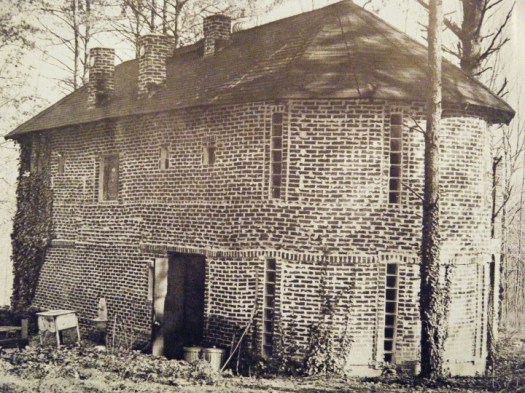
Scudder had been an Associate Professor of Pharmacology at Loyola University in Illinois before he and Odom moved to Chattooga County in 1976, to “escape the city.”  (Summerville News, Dec. 10, 1992).  It took Scudder and Odom three years to complete the construction of their medieval style home, complete with gargoyles, skulls, and old European antique furniture, including a centuries old harp.  They had named the rambling two story brick castle “Corpsewood Manor,” because of the rows of dead trees which they had found strewn around the property when they had first seen it, reminiscent to them of neat rows of corpses.  Only a few very trusted individuals had ever been allowed inside the house.  Fewer still, were allowed past the kitchen into the “inner sanctum.”  Outside, some distance away from the house was a three story building which became known as the “chicken house.”  At the top of this building was a room completely painted in pink, containing only a mattress and bed springs, sheets, a chair, and a kerosene heater.  It was in this pink room that Dr. Charles Scudder played out his homosexual fantasies with various partners, utilizing drugs and other paraphernalia to increase his pleasure.  It was this penchance for sex that lead to his downfall and death at the hands of two people he apparently trusted; Kenneth Brock, and Tony West.

It was Brock and West, along with two other companions, Joey Wells and Teresa Hudgins, who approached Corpsewood on December 12, 1982 in their red 1970 Javelin with murder and robbery in mind.  Already high on “toot-a-loo,” an extremely potent mixture of paint thinner, glue, and alcohol, the two men along with their companions arrived, and apparently at first suggested to Scudder that they be let into the house.  Scudder was apparently unwilling to do this, so it was suggested by someone that they go to the “pink” room.  When they arrived there Brock suggested that they all needed plastic bags to sniff the glue mixture and get high.  Scudder slipped down the ladder from the pink room, and returned with 4 plastic baggies and some home-made wine.  A few minutes later Brock suggested that they needed some more toot-a-loo, and went down the ladder.  When he returned with a 22 rifle Scudder said “bang, bang.”  It was at this point that Brock and West turned violent.  Brock pulled a hunting knife and put it to Scudder’s throat.  “What game do you want to play?” said Scudder, still apparently not believing the men were serious.  “I’ll play your game.”  Brock and West then cut up one of the pink sheets and tied Scudder up, and began to demand money.  Wells and his girlfriend became frightened at this point and wanted to leave, but West also threatened them.  “Tony, you don’t need this on you!”  begged Wells. (Summerville News, December 1992) West would not listen, and went back to threatening Scudder.

Brock then took the 22 rifle, and went down the ladder of the chicken house, and to the back of the manor.  Odom, who was apparently unaware of what was happening turned toward the door when he heard Brock’s approach, and was promptly shot in the head by Brock, through the door.  Brock then went into the house and shot the two huge Mastiffs.  Brock and West then brought the bound and gagged Scudder into the house past his dying companion and into the living room, where they asked the grieving professor one final time where his money was.  Telling them once again that there was no money on the premises, Scudder moaned his final words:  “I brought this on myself.”   West then shot Scudder in the head.  “Now tell me by God I don’t have the guts to kill somebody,” exclaimed West to Brock and the horrified Wells and Hudgins. (Summerville News, Dec. 1992)

Brock and West then ransacked the house taking several items such as a jeweled dagger, a silver candelabra, and some coins and silverware.  Gary McConnell who was sheriff at that time, said these items were valued at about $25,000. dollars, although West and Brock probably got much less for them.  Brock and West and their companions then took Scudders jeep, and drove away from the death house.

With the realization of what they had just done dawning on them, West and Brock took their two companions to West’s sisters house, all the time threatening them not to tell what they had witnessed.  Hudgins could not contain herself, and told West’s sister while she was taking Hudgins home to get some belongings so that she could stay at her house, as Wells put it, “until things cooled off.”  Both West’s sister and Wells again warned Hudgins not to tell anyone what she had seen.  In the meantime, West and Brock had taken off through Alabama in Scudder’s jeep, apparently heading for Mexico.

Realizing that they would probably be reported, and that Scudder’s distinctive jeep, with pentagrams on the sides would be easily recognized, they stopped at a rest stop in Mississippi where West summarily executed Lt. Kirby Phelps in order to get his car.  They then wandered aimlessly across Texas, finally parting ways with each other after an argument at a topless bar in Austin.

In the meantime, Ms. Hudgins had called Sheriff Gary McConnell, and told him what had happened.  The authorities had already discovered the slaughter at Corpsewood because a friend of Scudder and Odoms had noticed some bullet holes in the mansion when he had come to tell them of the death of a mutual friend.  Lt. Phelp’s body had also been discovered in Mississippi by a Civil War relic hunter.  Dr. Scudder’s jeep along with the box of 22 shells that West and Brock had taken, was discovered about ten miles from the scene of this crime.

Knowing that his unexplainable crime spree was over, West came back to Chattanooga Tennessee and turned himself in to Officer Gene Haas.  Because of a mix-up in identifying West’s name, he was almost let go.  However, a call to Chattooga County yielded a very definite yes to the question of whether or not Tony West was a wanted man.  Kenneth Avery Brock hitchhiked back to Georgia, and called his mother from a phone booth off of I-75.  The phone call was traced by police from Brock’s Mother’s phone, and Brock was arrested on the spot.  Both criminals were returned to Summerville to stand trial for the murder’s of Scudder and Odom.

Kenneth Avery Brock confessed at least twice to the murders of Scudder and Odom on the ride back to Summerville from Cobb County, even though he had been read his rights several times by authorities.  He subsequently pled guilty, and was sentenced to three consecutive life terms in prison by Judge Joseph Loggins.  Although first admitting over five times to police that he was guilty of murder, West recanted his confessions, and pled not guilty to the murders.  His trial took place in March of 1983, and although his defense attorneys Ben Ballenger, and Skip Patty tried to contend that West’s and Brock’s murderous rampage was caused by being under the influence of LSD administered to them  by Scudder, he was convicted of murder, and was sentence to die in the State’s electric chair.  This death sentence was later overturned, and West’s sentence was commuted to life in prison.

No one can ever be sure what was in the mind’s of these two young men on December 12, 1982.  Was it drug induced rage that caused the spree, or as prosecutor Ralph Van Pelt stated, just plain old robbery and murder, which was sensationalized by the media due to the unorthodox nature of the victims?  Did Dr. Scudder predict his own death in a supposed self portrait found at Corpsewood depicting a bound and gagged man with a wound to the head?  Was it as West now claims that Dr. Scudder’s soul went into him (West) causing him to do these awful things because Scudder wanted to die so that he could be re-incarnated? (Summerville News, Dec. 1992)  Did Scudder plan to make the Corpsewood Manor a haven for Satanists and subversives?  Was he second in command in the United States to Anton LeVay, the purported head of the Satanist movement in this country?

There is enough written material about this murder to fill many, many volumes with speculation, superstition and innuendo.  The basic facts however, seem to point to plain murder and robbery for which the guilty parties are now behind bars, hopefully for life.

The ghost like remains of Corpsewood are now overtaken by trees, weeds and vines to the point that it would be difficult to know that the castle was ever there.  But although nature is fast reclaiming this spot, I would not want to be there at night…especially on any December 12!


2014

2014, YES IT IS…OR WILL BE

I was thinking the other day about the New Year, and wrote a little piece about it. I started trying to recall the first New Year’s celebration that is logged away somewhere on the hard drive of my brain. I can’t really remember a specific one. Isn’t that strange?

I remember early Christmases. Oh how well I remember that Red Wagon that Santa brought me back in 1954 when I was only 4 years old. We lived in a little old Mill house up on Sixth Street in the proverbial “Mill” town of Trion, Georgia. It was the last Christmas in that house before we moved to a new house that my Dad was having built in another part of town. I guess things were not too bad that year. If we could afford that wagon, and the set of Hopalong Cassidy guns and the outfit that I also got AND move later on to a new house then things were going pretty good. We lived in that new house for eight years until Dad could no longer afford the payments, and we had to move out, back to “Hot Town” just two streets over from where we were celebrating in 1954.

There were a lot of good Christmas memories at the “new” house. My brother was born while we were there. There were “cut down” cedar trees every year in front of the big “picture” window that my Mom was so fond of. There was the year of the Lionel train; there was a year in which I got a telescope to view the Universe and its vastness. I never appreciated the years there as I should have. There was the one wonderful Christmas back in 1962 I believe it was, when it snowed. One of the VERY few times that “heat miser” let it snow in Southland! How beautiful it was to come out and look through that big window that morning and see the snow falling in huge feathery flakes, and the snow already piled up high in wind drifts against the trees. Santa that was the year you were supposed to bring a sled, but we had to make do with cardboard boxes cut up into home made flexible flyers! And oh we did. We slid down the hill at the cemetery across the road from my house until the dead people there must have thought Jesus was coming back, what with all the commotion. I don’t even have a clue what I got that year for Christmas. I got a WHITE Christmas. That was enough. That was sufficient in itself to provide memories to last the rest of my life. Surely any toy would never have been impressive enough to do the same.

Oh yes, Christmas memories are not hard to come by. But New Years? That’s another thing altogether. My folks never made such a big deal about it. Some of the time we were at my Grandparent’s house and went to bed with the chickens even on New Year’s Eve. Even when we were at our own house, I can’t remember any New Year’s parties, or any celebrations that were held in anticipation of a New Year. It just came. The years just stacked up, and you greeted them with the same anticipation that you did any other day.

After my wife and I married in 1969, we started marking the New Year.
I think that every year now since we have been married, my wife and I have done something to mark the New Year. We let the kids sit up and watch Dick Clark blather on, and watch the big ball drop at Time’s Square and the “Peach” drop in Atlanta. I can’t remember if there were any years that we were not together, or not many really that the whole family hasn’t been around. Just the last few years, I think we have gone our separate ways to some extent. Most of the time now, we go to my daughter’s house and play board games and then do the count down. Backwards from ten to zero and ZOOM, in comes another year.

It’s all pretty humbling when you step back and think about it though. This year we are marking as 2014 A.D. (At least those of us who use the Julian calendar. The Chinese and the Muslims both have a different “New Year” then we do. This year the Chinese New Year starting on January 14 and will be the year of the Horse, very appropriate. The Muslims use the Hijah Calendar which was created by Mohammed) Most people make the mistake of thinking that A.D. stands for “After Death” when it’s Anno Domini or “In the Year of our Lord” It was “invented” if you will in/about the year 525 by Dionysius Exiguus to figure out when Easter was. But, I digress. Think of 2000 and 14 of those babies! Just think of all the monumental things that have happened in those 2014 years. Break out your history books sometime and thumb through them. There are some Earth Shaking years wrapped up in there. Some years that changed human history forever. Some of them are ones that are a no brainer. 1945, the year that the first Atomic bomb was used. That one changed the world forever didn’t it? There are some that are more obscure, but nonetheless just as important. How about when Martin Luther posted his 95 Thesis on the door of Wittenberg Church on October 31, 1517? Although Luther didn’t know it at the time, that year broke the hold of the Catholic Church on Christianity. Just think how much that change our world.

How about September 11, 2001 as a recent year that changed history? It definitely has, and will continue to, as we move through all of the ramifications and repercussions of moving through this Brave New World we are now entering into.

Think about all the new technology that has developed since World War II. For some reason, that particular War more than any other has seemed to be a catalyst for the development of Science in leaps and bounds. It’s amazing what has taken place, but it’s scary at the same time. I just heard a man talking on the Radio not more than a week ago saying how one day soon all humans would have special chips inserted into their hands so that they would not have to have cards, or even any other forms of identification in order to buy things, or go places. No more credit cards, or passports just that little non-removable chip to tell the world who you are. I am glad I am about past the point where I might be around when they institute THAT little bit of Science one of these New Years. I am afraid that they would just have to skip me on that one.

I have also heard where more and more people are now using biotechnology which identifies human embryos outside of the human body for things such as disease, genetic malformations, and most prevalently for the sex of the baby. Pretty soon it’s going to get down to the parents being able to say: “I want a boy with blonde hair and blue eyes, who has an I.Q. of at least 150, and we are going to want him to be a pianist” The new Eugenics, and yes it will probably get to that point one day if whoever decides on this type of thing (and who will that be?) decides to let it get that far. If it’s our Federal Government, then God help us, it will certainly be a mess. It could already be in use as far as we know in some countries out there. Think about it. There are a lot of countries who don’t even have the constraints of Ethics which we have in the U.S. (And that’s saying something right there, buddy!)

Now there is also word of a new Computer program being developed which can store everything which is on a human beings brain on the hard drive of the computer. It can’t store the emotion, or the spirit of the person. Just what they knew or know. Think about the uses for that, when a program can be bought which you can store Grandma or Grandpa’s knowledge on. Maybe they will fix it up where you can put a 3-D likeness of the person on there, and actually program it where it can seem like you are communicating with them. “Hey Grandma, do you remember back when I was 13, and fell down your steps and broke my arm?” “Of course I do Honey” it answers back. “That was really a bad day”

Scary.

They say what the mind of man can conceive can be turned into reality. And to think I have been reading Stephen King for years. Oh boy.

That’s all pessimism though, and maybe things will actually turn out for the good in some of the upcoming New Years. They are coming up with treatments and cures for more diseases every day, and doing things to relieve the suffering of humanity. Yes, believe it or not there ARE still some humans out there who work on things to benefit others without the thoughts of greed or manipulation guiding them. (Not enough of them though!)

I heard where there are Cancer treatments being developed through genetic research, where people’s own cells (I believe stem cells if I am not mistaken) can be used to attach a killer “trigger” to, which only affects cancer cells, so that when the cells are introduced into the body they kill ONLY the Cancer and leave everything else healthy. What a good year it will be when they can use that one.

That type of genetic research, where genes are modified to take care of human problems and suffering can be a good outcome. What if they could eliminate suffering of all kinds? Some people would think that a world without suffering would be wonderful. But I wonder. I wonder if ALL suffering should be eliminated. Seems like that would take away a little bit of what it means to be human, but that’s just my opinion.

Then there are those that will tell you that all of this must be leading up to the “end of time” Yes, that’s right, the end of all the “New Years.” In Christian beliefs Christ himself is going to return again in one of these New Years for those who are his children. According to many Christians, the signs are out there for all to see. The diverse Earthquakes and disasters (remember the tsunami several years ago on the day after Christmas?) the continuing problems in the Middle East, especially between Jews and Arabs. The widespread and very dangerous spread of new antibiotic resistant disease. The famine which affects more of the world every day. The lack of Love in people for other people. Matthew chapter 24 chronicles what Jesus had to say about it. Read it and decide for yourself. A lot of people already have.

I am not sure of everything that is happening, I will tell you that for certain. At my age, a lot of the new technology is fascinating, but it’s like a double edged sword. My religious indoctrination says the signs are out there, but the scientist in me is in conflict with the theologian. The reader of the written word in me, the seeker of knowledge, wants to keep abreast of everything that’s going on in the world, but sometimes over analyzes or doesn’t understand the significance of what is being input and processed by my teeny brain. The realist in me knows that things can’t stay the same, but the dreamer wants things to stay like they are, or go back to the way they were!

Remembering New Years? Do you see know why it’s hard to do. When you get stuff like this in your head, then it sometimes just starts to run together like syrup across pancakes.

I am glad it’s almost 2014, and I am super glad I have made it this far and if nothing happens I will be watching the ball drop in times square at midnight December 31, and I will be hoping that this year may just be THE year when everything starts to come together for the good of everyone in the world. Happy New Year to everyone in The Year of Our Lord 2014.

Don’t Blink or You’ll Miss It.

It’s been a long day at work. I’m frustrated by office politics, stubborn employees, and arrogant bosses. It’s unseasonably warm for October, and the air-conditioning unit at my house is on the fritz, so I open the windows to get a little breeze. There’s a tiny oscillating fan in the hallway that I turn on to move the air around just a bit. I lay there in bed, tossing and turning, trying to force myself to sleep.
Suddenly off in the far distance, I can hear a train whistle blow. It starts our faintly, like a low moan in the wind, and ever so gradually changes pitch to higher and louder frequencies until I know it is at it’s closest point to the house. A freight train is coming down the track. A feeling of security seems to wash over me, like a warm ocean wave over a little child’s sand castle, and as I drift off to sleep . . . I remember, and I dream. I dream of the past:

CHAPTER ONE

Sixty one years is a long time. My Mother had a photo of my Grandfather and Grandmother which was taken when they were 61 years old. I look at it, and they look old to me. Then, I look in the mirror, and sometimes I see my Grandfather looking back out at me, just the same as he was in that picture that was taken back in 1950. The year I was born.

I was born in a little tiny brick hospital in a little teeny mill town, named Trion, Georgia. There was only one Dr. there, but I still came out ok, I reckon. I have all my fingers and toes, and I can still walk and talk to this day. I guess that Dr. Hyden did ok, even though he wasn’t surrounded by a crowd of spectators and Daddies and Grandma’s with video cameras, and everyone else in the delivery room like they have nowadays, with everyone patting each other on the back and congratulating the new Mother and the baby and the Daddy. Sheesh… It’s like a circus now. It was sort of a quiet and peaceful event back in 1950. A certain privacy prevailed then.

My Mom had been working at that little ol’ mill for a couple of years. She and my Dad were married in November of 1949 and he was still in the Navy, so I got taken away from the city of my birth to the back woods mountains of Blue Ridge, Georgia in the lower foothills of the Blue Ridge Mountain range. Grandpa lived on the very last house on Snake Nation Road, which was an unpaved dirt byway that was only wide enough for one car in some places, and had two creeks to cross through before finally winding to an end in front of his old two story wooden ramshackle house. Luckily you didn’t meet too many cars coming in the other direction, as there were only about 8 houses on the 10 mile stretch that led to the “Home place” as it was called. During the rainy springs though, the creeks would rise quickly as flash floods over spilled the banks and turned them into mini raging rivers. I can recall many times of crossing when the car seemed about to be washed away in the current. Luckily the old cars of the 50’s and early 60’s had some weight to them, and we were always able to persevere and get across.

I lived the first two years of my life in that squeaky old wooden house. The only heat was a single fireplace in the middle of the downstairs living room, and Grandma’s wooden cook stove back off in the rear kitchen. There was no indoor plumbing. (I didn’t have to worry much about that at the time though) and the walk to the outhouse was about a 25 yard trek up a slight hill back behind the house just into the edge of the nearest wooded area. There were actually Sears and Roebuck catalogs there for many years. When I got a little older, I thought it was neat to have reading material in the bathroom.

My Grandmother doted on me. I believe that she was afraid I would starve. They started feeding me Irish potatoes, baked in the coals of the fireplace when I was six months old, and by the time I was a year old I looked as though someone had stuck an air hose in my mouth and over inflated me. I am sure I enjoyed these repasts, but I cannot recall them much, to my chagrin and disappointment. I guess I could have been considered a “super baby” but, I would have hated to have been my Mother or Grandmother and had to have emptied out all those cloth diapers over that two year period.

My Dad came home from the war in 1952. He had enlisted in 1944 at the tail end of World War II, and had stayed through Korea. Many was the time in later years I heard him lament that he wished he had stayed in for another 12 years. It was my Mom’s fault though. I think I was becoming a handful at 2 years old, and she wanted and needed his help. I am not sure which was the best course that Dad could have taken, but I am stuck with the one that he took, as he came home to go back to work in the little old mill in Trion, Georgia and start a home life for him my Mom and me. He sometimes revels in telling the story about how much I cried for my Mother on the day that he arrived back from the Navy and picked me up and started to carry me out of Grandpa’s house. I started hollering like a banshee for my Mom, because this strange man had come in and picked me up and was kidnapping me.

I guess that the smells and sights and sounds of my Grandparent’s house became ingrained in my memory in those two years, because I never felt more comfortable anywhere than when I was there at that old house, curled up in a chair reading or sitting out in the front porch swing during a Summer thundershower with a blanket over my head to keep dry from the blowing rain, listening to it hit the old tin roof so hard that it sounded like someone was throwing rocks on the roof. It was a soothing and refreshing retreat, and I cried the April day in 1973, when Tornado’s tore through that area and blew the old house off of its foundations and into the annals of history. They burned it down, and replaced it with a trailer for the old folks, and though some of the smells and sounds lingered, it was never the same refuge after that, never the same degree of security and peace, serenity and comfort. I have never found another place that has provided that same degree of safety.

We took up residence in Trion, in an old Mill town “duplex” This was the type of residence which “the company” built for the mill workers back in the 1930’s or before which consisted of identical twin dwellings for two families nestled under one roof. There was a wall down the center of each of these, but the walls were paper thin, and it was always possible to hear what was going on with your in house “neighbors” As the 50’s came along, many of the duplexes were converted into single resident homes, as “the company” divested themselves of them and got out of the rental business. It was into one of these converted duplexes that we moved early in 1951. I can remember that place, and the things that went on, actually…..I remember it all very well . . . and I dream of time’s past.
All those late Autumn nights in Dixie, when the air was still as sticky and hot as warm pancake syrup. The wind would drift slowly through the window above my bed, causing the curtains to flutter like the giant butterfly’s wings they resembled, flapping out and back hypnotically. They were a yellow cotton print with dark and light orange stripes, which my Mother had bought the week before at the Redford’s five & dime store for $1.98. It seemed as if a giant monarch butterfly had landed above my head and was spinning her cocoon, in preparation for the long winter ahead. I knew a Monarch from a Checkerspot, since two of my friends, the Wade twins, were collecting specimens of different butterflies. They would hang around the grass fields with their tiny thin nets and their identification manual, discussing the different types of insects they were attempting to capture. They were eager to show off their specimens after each day’s hunt, so therefore I unwillingly became an insect expert.
Momma had been delighted to have brand new curtains to put up in my bedroom. I can still see the smile on her face as she hung them. At $1.25 an hour, it was seldom that my Dad could ever afford to get her something new. He had made a point to do it this time, and it had made her happy enough to hum.
Outside, I could hear the “clickity-clack, clickity-clack,” sound of the midnight freight train, which religiously passed by only a block away from our house, every night at exactly its scheduled time, taking bales of cotton into the loading docks at Riegel Mills in exchange for finished cloth which they hauled out to the world. Nobody could have been more precise than those Southern Railway engineers. You could set your watch by them. I know this to be a fact, because I looked at my watch by the moonlight that shined in through my window on the nights that the mournful moaning of the train whistle would wake me. When you mixed that tone with the sound of the whippoorwills singing, it was just like something out of a Hank Williams song:

“Do you hear that lonesome whippoorwill? He sounds too blue to fly?”
“That midnight train is winding low, and I’m so lonesome I could cry.”

Those were the kind of nights we had back then. I still dream about them, and the Hank William’s lines become more and more meaningful with every passing year.

Riegel Textile Corporation was where my Dad worked from dusk to dark fixing the looms that would grind out the government contract cloth that Southern Railway hauled away every morning. The first five minutes of every evening when he came home from work would be spent at the bathroom sink scrubbing the grease out from under his split and sometimes blackened fingernails. Even before everyone got a hug or a pat on the head, his hands had to be clean. He observed this ritual with the same reverence as a priest preparing to serve a sacrament, or a physician getting ready to operate. He didn’t want to contaminate anything at his home with the physical remnants of his day’s problems.
If it had been summer, Dad and I might have had time to go outside and throw around the worn out, game used baseball, which Coach Johns had given to me after the High School baseball team had thoroughly beaten it to death. This ball was so whop- sided that it would practically roll by itself on a flat surface, if you laid it down. Nevertheless, it was MY ball . . . My very own baseball. I guarded it with all the affection that my immense, slobbering, Heinz 57 dog, Whitey did the soup bones that Mom would occasionally give him. The only difference was that Whitey would bury his bones out in the yard, causing Daddy to get more than slightly irritated with him, while I would hide the horsehide in the bottom of my sock drawer so that my little brother Mikey couldn’t get hold of it. After all, Coach Johns had given it to me; dredging it up out of the bottom of his green duffel bag along with a cracked #32 bat that “Digger” Smith had whammed up against the side of the dugout when he struck out for the third straight time against the Summerville High Indians. That ball and bat were two of the few treasures I possessed.
Coach Johns had seen me out in the yard picking up rocks and swatting them with a piece of a pine limb I had salvaged from the deep woods behind our house. I guess he had either taken pity on me, or gotten scared I was going to foul one of those rocks off through his bedroom window, as I had gradually become more and more expert at crashing those imaginary homers out into the woods.
“And there goes another one out of the park for Mickey Mantle,” I could hear ‘Ol Dizzy Dean, the T.V. announcer for the Yankees say, as I arched number fifty deep out into the pines.
Number forty-nine had come perilously close to Coach John’s house, which was in my imaginary left field, but I didn’t think he’d been watching me, as I managed to employ hard body english to keep it from putting a hole in his siding.
When he had hollered, “Hey Bowers, come over here,” after Mick had swatted number fifty, I figured my ass was grass, and he was the lawn mower.
“I got something for you, kid.” He had intoned in his nasal voice.
Mind you, he couldn’t help talking that way. When God had been giving out noses, Coach Johns had thought he said: “Roses,” and had asked God for a big, red one. Therefore, combined with the fact that the Coach didn’t open his mouth very wide when he talked, the effect was one similar to talking through one of those cardboard tubes that came out of the middle of a roll of toilet paper. It also didn’t help matters that the Coach had been known to get into the sauce immediately upon arriving home in the afternoon. However, he was apparently more tolerant of little kids who slammed rocks around in their back yard, than he was of the High School morons who swung at balls out of the strike zone, of whom it had been rumored he screamed at with his mouth wide open.
“Take this ball and bat, Mr. Mantle.” He had droned. “And for God’s sake, go up in the graveyard, and knock it around before you break out a window.”
I knew nobody would ever tell Mickey Mantle to be careful not to knock out a window, but I wanted the bat and ball so badly that I kept that opinion to myself.
“Wow, thanks a lot Coach,” I sputtered as I grabbed the goodies and took off for the graveyard.
I spent the rest of the afternoon near the rear of that huge cemetery, where nobody was yet buried, hammering that horsehide mercilessly into submission. I had just broken Roger Maris’s home run record he had set that summer, when my Mother leaned out the back door and in her best shrill voice, shouted my name:
“Larryyyy . . . come home for supper,” she yelled
The reverie of that late October Saturday was spoiled. How embarrassing for the newly crowned, eleven year old home run champ, to be publicly humiliated by having his mother call him in for supper right in the middle of a World Series game.
“Coming Mom,” I answered, to keep her from having to repeat the harangue.
At least she wasn’t like Tom and Tim Dennis’s Mom, who could whistle louder than any human being, and who also had to know where they were almost every minute of their waking life. If that woman didn’t hold the world record for breaking glass with her whistle then there wasn’t a cow in Texas. She would put both of her pinkie fingers in the corners of her mouth, pull her lips back into a grotesque grin, stick her tongue up in the roof of her mouth, and let it fly! She could be heard from Tom and Tim’s house all the way over to the Elementary school playground, which was almost a mile away. She was also as tough as the Warden at Alcatraz, and did not put up with any bull from anybody, especially her own two boys. If they weren’t home five minutes after she whistled the first time for them, they could expect stern disciplinary measures when they hit the front door. If she had to whistle twice, it was an automatic whipping. Many were the days I had looked through our front picture window, and
seen Tom getting his rear end tanned, even though he was a foot taller, and had fifty pounds on his Momma. When you were out playing somewhere within range, and heard that shrill whistle, even if Tim and Tom weren’t with you, you could be sure that somewhere in town there were two guys that were getting their rear in gear. Tim being the more athletic of the two could make it home from anywhere in town within the five minute limit. Heck, he later became a star running back on our High School team, and never did think to thank his Momma even once, that I can recall. She ended up dying while Tim and Tom were still kids.
Even though Tim was extremely fast, being able to get home from ANYWHERE in town within five minutes indicates the true nature of our community. In a word, it was small.
As my Dad once told someone from out of town when giving them directions to Trion:
“Stay on highway 27 North as you go through Summerville, and after you go about five more miles, start to slow down and be real careful, cause if you blink you’ll miss it.”
As I had previously expressed, the one and only means of making a living in the tiny town of Trion, Georgia, was by working at what was originally known as The Trion Company. It was, and had been the only business in the town, since it’s founding in 1840, by three gentlemen interested in forming a weaving mill somewhere outside of the coastal area near Savannah. It was the first cotton mill in North Georgia. They considered many different locations in Georgia, but were finally swayed by the fact that there was cheap land available right next to the Chattooga river, which would be their main lifeline for the power and water needed to run their mill. The town of Trion grew up around the mill, and both were named in honor of those three men, the name being derived from the fact that there was a “trio” of them who founded the mill, and subsequently the town. I say grew up, if you can call a town of scarcely more than fifteen hundred people, “growing” into anything. The mill itself now had almost that many people working in it, but many of them made the commute from small communities in the surrounding North Georgia, Tennessee, Alabama area, the Tri-State area, so to speak. This area does have a little history.
The Cherokee Indians had once had a village on the river near the present cite of the town of Trion, which they called Island Town, and a clever and inventive chief named Broom was one of their leaders. There are still a lot of farms and fields in the area where you can pick up artifacts, such as arrowheads, and pounding and grinding stones for corn.
Sequoia, whom the white man called George Guess, and who was the inventor of the Cherokee alphabet, was born just a few miles away in a little community known as Alpine. The Cherokees, led by old Chief Broom, had for the most part been very tolerant of the white men who moved through their land. However, even Chief Broom’s influence had not been able to keep them from being removed from their land by order of President Andrew Jackson in 1832. After their removal, and the infamous Trail of Tears, the bulk of the little town was erected on the site of their former village. I sometimes wonder if the ghosts of these ancient people who inhabited this area for so long don’t cause some of the mischief that goes on around the town. Seems like sometimes when I am laying in bed, I can hear their voices speaking in an unknown but pleasant language, floating in on the breeze, asking why, why, why . . . !
Most everyone in town still lives in houses built by the Trion Company in the late 1800’s to accommodate the mill workers. These diminutive frame houses were practically thrown up overnight, out of whatever materials were on hand at the time, without the use of carpenter squares or levels. Everything was built by the “eyeball” method, where the foreman would eyeball whatever was next in line to be nailed, and if it looked square to him, he would yell, “Looks good, nail it!” The reason my Mother can never get a picture to hang straight on her wall in the old mill house where they now live, is probably because the day they were building the house, the foreman had a bad hangover from the night before, or one of the carpenters had the hiccups while he was nailing.
All of the houses started out as two room “duplexes” with one family living in each side, with one large community room, a kitchen, and a bathroom. Heat was provided by one fireplace in the big room which burned wood, or more likely coal, which was plentiful due to being one of the sources of fuel for the boilers at the mill.
Back in the old days the Trion Company practically owned the town, and the people, lock, stock and barrel. They issued their own money in the form of coins or coupons redeemable for merchandise at the Company owned department store which was called: “The Big Friendly Trion Department Store.” Employees could get more of this “script” than they could cash, and The Company encouraged them to take it instead of cash. After all, The Big Friendly had everything a person needed from A to Z. The store would also provide “easy credit” for those who were running a little short, eventually practically enslaving some people for life in a cycle of debt to the company. Remember Tennessee Ernie Ford’s song, “Sixteen Tons?”

“Saint Peter don’t you call me, Cause I can’t go . . .”
“I owe my soul to the Company Store . . .”

Apparently, this was more reality than fiction in some small Southern mill towns.
The Trion Company also owned beef and dairy cattle. At one time the dairy in Trion had the World Champion milk cow, named Green Meadows Melba, who could produce hundreds of gallons of milk a week! She was famous all over the world! Every dairy farmer in the country wanted one of her calves. We even have a street in our town now that’s named “Melba” drive, and I bet not one of the people living there know their street is named after a cow. Once when Melba had been put on a train to go to New York City for a contest, the OWNER of the mill had gotten on the train car and rode with her all the way to New York. The man loved that cow!
Because of cows like Melba you could be assured of waking up every morning to the sound of clanking milk bottles, and look out on your porch to find extremely fresh milk, which had just that morning been inside a cow’s udder. (Have you ever wondered what the first man to ever milk a cow must have been thinking? He had to be doing it on a dare! )
Additionally, the Trion Company had farms and orchards in the area that produced fresh fruits and vegetables, and other foods such as pork and poultry, for employees to buy. I can still picture in my mind the old apple trees up on Orchard hill, and how beautiful the pink blooms were every spring. I also remember many a night spent on the john with what we now refer to as “Montezuma’s revenge,” from having stolen and eaten too many of the green apples that grew so plentifully on these marvelous trees. Surely this was nature’s punishment for young apprentice thieves, designed to encourage them to follow a life of honesty.
There was even a funeral home in the Big Friendly to take care of the faithful employee who passed away while in service to, or after retirement from, the Trion Company. They would lay you out in the parlor, right next to the department where the cloth piece goods were sold. I am quite certain that many a housewife, unfamiliar with the layout, and looking for a yard of cotton broadcloth, or some sewing thread, would wander into the funeral parlor instead, and end up paying respects to some family that she did not even know. Seeing a corpse in a department store was a shock to some, but it was a way of life back in the old days in Trion.
Right across the street from the Big Friendly department store, the Trion Company had thoughtfully provided a spot for the Post Office, and right next to that government institution, was the Trion Barber shop. There was also a bank adjacent to these buildings. Therefore, a person could do any and all of the following things in Trion, Georgia back in the old days:
First, you could be born at the Community Hospital, which was owned and operated by the Company, which also recruited the Doctors and Nurses. In addition, the Company provided housing for the Doctors and Nurses who did not have, or could not afford their own. Several older houses in our town are still knows as the “Nurses Inn.” All your health care was guaranteed within a block of the mill.
Secondly, you could go to the Trion School; which was built by the Company, which also recruited the teachers, paid for the books, and even provided the power and heat for the schools. In the old days some students would graduate from the Trion Schools, but in the hard times of the Depression, children more likely would only go until they were considered old enough to be employed in the mill, at which point they started their working career. My Dad remembers going to work there in 1940, when he was twelve years old. You could spend your whole life working at the Company. Your career was guaranteed, within a couple of blocks from your house. The Company even had a bell to begin with, and later a very loud whistle, which sounded at twenty minutes until shift change time, and then again at exactly shift change time, in order to help get the employees to work on time. Try to get in a few extra winks, or take an afternoon nap, when a whistle loud enough to wake the dead goes off a block away from your house!
Next you might move into a Company house, get married to your High School sweetheart, and start a family. You could get all your furniture from the Big Friendly, as well as your clothes, and your food. You could mail your letters and get your mail at the Post Office right across from the mill. You could get you hair cut by one of the expert barbers, or your shoes shined, by “Pete” the shoeshine boy at the Barber shop right across from the mill. You could do your banking right next door to the Barber shop. Your personal needs were taken care of.
If you wanted entertainment, there was a theater directly across from High School, which the Company had helped the town to build. You could go there and be entertained by everyone from Tom Mix to Old Yeller. There was a YMCA attached to the theater which housed a gym, an inside heated swimming pool, and a snack bar and grill! (really it did, even back in the thirties!) Your recreation was guaranteed.
There were numerous churches of all denominations in the town, including the First Baptist Church of Trion, which Mrs. Allgood had built in memory of her husband, who was the son of one of the original trio of men who had founded the Company. He was murdered back in the late 19th century by his brother-in-law who was a Doctor in the nearby town of Rome, Georgia. There was a scandal, and a spectacular trial, but that’s another book. All of the churches were within a stone’s throw of the mill. Your salvation was assured.
In theory then, a person could be born, go to school, work, worship, play, live and die, all without ever stepping foot outside the little town of Trion, Georgia. I’m reasonably certain that some people did. Your life was mapped out for you . . . That’s the kind of town in which we lived.
Employees or their family members who didn’t behave as the company thought they should, would be given one warning, and if the problem continued they would be terminated, and could not be hired back. They were “blackballed,” a phrase which was derived from the middle ages where kings who had too many knights in their service would put a number of white balls, along with one black ball in a helmet and have their charges all draw out one of the balls. The unlucky chap who got the black ball had to leave and never come back, under pain of death.
In the old days of the mill, if your son didn’t behave in school, you got one warning, and then . . . blackballed. If your wife was spreading gossip, one warning . . . ! If you weren’t working hard enough to get the required amount of work out, one warning and then . . . you were history.
Gradually over the years, things changed. Unions started to develop in the North. These unions tried to come into the small Southern towns such as Trion, but they were met with violent and sometimes bloody opposition. The companies did not want them, and so it seems, neither did most of the people. Although the companies owned and ran almost everything in small towns such as Trion, they did so the largest percentage of the time on a benevolent basis. People had a high degree of loyalty to companies such as the Trion Company. However, the influence exerted by the formation of unions in the North, coupled with another earth shaking event, finally broke the strong grip which large companies held in small Southern textile communities. That earth shaking event was World War II.
I am certainly not going to attempt to analyze all the influences of World War II on little towns in the South. I think it is sufficient to say that it changed our way of life, as well as almost everyone else’s on this big blue marble on which we live.
Men went off to fight in the war. (So did many women, and I don’t want to neglect to mention that fact.) Women had to go work in the factories, due to the shortage of men. Moms’ suddenly found out that they could produce goods needed in our war effort, instead of remaining homemakers. They also found out they could bring home a paycheck just like Dad used to do. Remember Rosie the riveter? Things would never be the same!
The United State’s sleeping giant, awakened by the Japanese at Pearl Harbor, geared up to such an extent to manufacture everything our military effort required, that it finished pulling the whole country out of the Great Depression. The Andrews sisters sang about the, “Boogie Woogie Bugle Boy of Company B.” Bob Hope went overseas to entertain the troops and became an institution. My Dad went into the Navy, bought his first car, and married my Mom in 1949.
Modern technology had its birth in the womb of World War II. Think of the list of things that we have now that we didn’t have at the beginning of the war. Television, computers, commercial jets, wireless telephones, the list is endless. There were also the obvious quantum leaps forward (or backward, depending on your outlook) in modern warfare. Where would we be without the Atomic bomb? Things definitely would never be the same!
Back at the little old Town of Trion things were changing. The Trion Company was bought by a man named Benjamin D. Riegel in the early 1900’s, and became known as Riegel Textile Corporation. The company script disappeared, and the company gradually started to sell off its houses to individuals. The dairy dried up, and the farms were abandoned, although the Company retained the land, and eventually planted pine trees on it, hoping to make some money in the future on pulpwood. Little did they know that they were creating one of the most favorite playgrounds ever concocted for neighborhood kids. Countless hours were spent playing “freedom,” a form of team hide and seek, in the pine woods behind my house. Many boring Sunday afternoons were spent climbing to the top of these wonderful pines and riding them to the ground like some kind of naturally grown bungee cord.
Even the old “Friendly” Trion Department store’s time finally came, and it was torn down on a cloudy, drizzly day in 1959, to make way for an expansion of the mill designed to house more looms. I was nine years old the day the wrecking ball descended on the store, and I remember vividly the tears in the eyes of the patriarchal, gray- headed people who stood near the Southern railway tracks and watched while the work crew did the deed. This institution which symbolized a way of life and security for them was soon just a tired pile of dusty rubble, analogous to those who were mourning it. Historians may look back on these people’s way of life, and think about it as oppressive and dictatorial. Most of the people I saw on the railroad tracks that day, however, had an entirely different name for that benevolent monarchy they saw slipping away from them, symbolized by the Big Friendly. They called them the “good old days.”
Although many of the attitudes of the people remained the same in Trion as they had in years past, things were at least physically changing.

A Little Learning…..

“To err is human, to forgive is divine” so says poet Alexander Pope.  Now this line was from a great big old huge poetical work of his that was LONG!  There was another good quote from this work too:  “Fools rush in where Angels fear to tread” Here’s one more:  “A little learning is a dangerous thing.”

Those three sayings have got to be in the top 100 of things people have said since 1701 (which is when Pope wrote them) they’ve pretty much become standards.

I’ve always thought that a little learning is a dangerous thing.  Nowadays if you get on Facebook or any other type of “social” media very often, you will see what I mean.  As Forrest Gump said:  “That’s about all I’ve got to say about that”

I know that I have “erred” pretty often in my life, and I have been forgiven.  So somewhere out there are a lot of divine people running around.  I’ve probably done a lot less forgiving than I should have.  I’m trying to catch up, so give me time.

Finally, in this group of somewhat disparate quotes (all of these came from one LONG poem remember) is the one about fools rushing in where angels fear to tread.  I’m not sure about where exactly it is that an Angel would fear to tread.  Angels have been described as being pretty courageous.  Fools on the other hand are…well…foolish.  Maybe it means that people should plan ahead and not take risks, lest they get themselves into a “pickle”

Wait a minute…that’s another one.  Dang.

My conclusion here is, that after reading only about one third of Pope’s “Essay on Criticism” for a college English lit class I once took, I am now glad that the internet age has ushered in the ability to google the things I only once dreamed of being able to learn.

I’ve learned a lot over the past 10 years or so.  Actually probably a lot more than I learned in college.  I’ve read, and read, and read, and researched…and sometimes I still cannot tell satire from reality.  As a matter of fact, it is getting a hell of a lot harder to do so.

I guess a little learning IS a dangerous thing after all.book